
February - October 2023
Atomic Forms
Redesigning the veteran disability claims submission experience

What is Atomic Forms?
Atomic Forms is Trajector's platform that enables veterans who received medical consulting services to complete and submit their VA disability forms directly to the VA. The platform integrates with Trajector's Zoho CRM, allowing veterans to access their medical data and complete forms including 526ez, 0781, 0781a, 0995, 8940, and 4138.
The multi-step process guides veterans from identity verification through document generation, e-signing, and final submission via e-fax to the VA, presented as a streamlined 5-step experience.
Platform
Android , iOS & PWA
Timeline
February - October 2023
Role
UI / UX designer & researcher
The Problem
Intimidating Government Aesthetic: V1 mimicked traditional VA forms with dense text blocks, clinical layouts, and bureaucratic language that made veterans feel like they were navigating government red tape rather than receiving support from an advocate.
Lack of Process Visibility: V1 provided no clear indication of progress or remaining steps, leaving veterans uncertain about how much work remained. Without progress indicators or step completion feedback, users felt lost in an endless process with no sense of achievement or forward momentum.
Repetitive Data: Veterans had to re-enter identical personal information across multiple forms (526ez, 0781, 0781a, etc.), creating frustration and the perception that the system didn't respect their time or data.
Emotional Isolation: V1 provided no acknowledgment that veterans might be dealing with trauma, financial stress, or emotional difficulty while completing disability claims. The interface felt cold and transactional during a deeply personal process.
Unclear Value Proposition: Veterans couldn't understand why they should use Atomic Forms instead of submitting directly to the VA, leading to skepticism about Trajector's motives and value.


Results & Impact

Design system |
Evolution for AF

Design Process

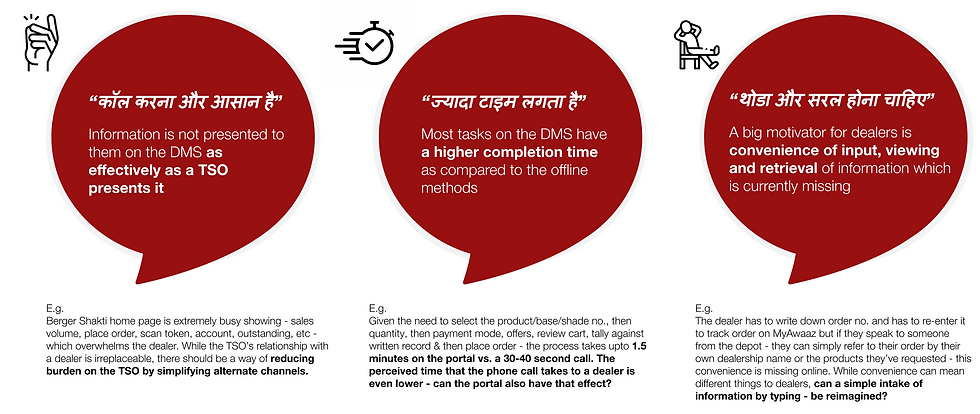
In conducting a disruption scan and heuristic analysis of 8 applications, we evaluated dealers' experiences, identifying strengths and weaknesses. These insights guided the development of our design system, drawing inspiration from successful elements and addressing shortcomings to create an unparalleled dealer portal.


Key Performance Metrics
High completion rates with strong case progression through the 5-step process. Analytics show consistent monthly case volume with 444 cases created in March 2025 peak month.
Strong conversion funnel with cases moving effectively from initiation (19 cases) through benefits selection (30 cases) to document generation (6 cases) and successful filing (14 cases), demonstrating the effectiveness of the streamlined user experience.
Sustained platform adoption with monthly performance showing consistent usage patterns, indicating veteran confidence in the redesigned process and reduced abandonment rates compared to V1.
Ecosystem & Business Impact
Design System Evolution: The V2 Atomic Forms became the cornerstone for Trajector's empathetic design language, establishing reusable patterns now implemented across:
VA Disability Calculator: Applying simplified complexity principles to benefit estimation tools
Dynamic Screener: Using progressive disclosure patterns for medical history collection
Client Portal: Implementing milestone-based progress tracking for ongoing case management
Future Products: Creating standardized approach for all veteran-facing digital experiences
Cross-Product Standardization:
Component Library Growth: 15+ new empathetic design components added to Mona Lisa design system
Pattern Documentation: Established guidelines for handling sensitive user data collection
Accessibility Standards: Enhanced system-wide accessibility patterns for diverse veteran demographics
Scalability Framework: Created reusable approach for simplifying complex government processes
Business Value Creation:
Competitive Differentiation: Atomic Forms V2 positions Trajector as more user-friendly than direct VA submission
User Acquisition: Improved completion rates support higher conversion from consultation to submission
Operational Efficiency: Reduced support burden through intuitive self-service design
Brand Trust: Enhanced perception of Trajector as veteran-advocate rather than form processor
Long-term Strategic Impact
Market Positioning: Established Trajector as a technology company that truly understands veteran needs, not just a claims processing service. The empathetic design approach differentiates from competitors who focus purely on compliance rather than user experience.
Product Roadmap Influence: V2 success validates the strategic simplification approach, influencing future product decisions to prioritize perceived ease over feature transparency across all veteran-facing tools.


We initiated design sprints to foster cross-departmental collaboration, involving Product Designers, UX designers, researchers, business leaders from diverse verticals, and Creatives who contributed innovative ideas. The goal of these sprints is to unite teams towards a common objective: enhancing our consumer experience by addressing our users' current challenges.


V2 Transformation | Strategic Solutions
Empathetic Visual Language:
Replaced government-style density with clean, approachable design using the Mona Lisa system. Warm colors, supportive messaging, and human-centered layouts that feel like a trusted advocate rather than another bureaucratic barrier.

Strategic Complexity Hiding:
Presented the process as 5 manageable steps while intelligently handling 11+ backend requirements invisibly. Veterans see clear progress toward completion rather than overwhelming procedural complexity.

Smart Data Intelligence:
Eliminated repetitive entry through intelligent form logic that populates veteran information across all required documents, respecting their time and reducing friction.

Emotional Support Integration:
Built in acknowledgment of the emotional weight of disability claims through supportive language, celebration of progress milestones, and design choices that prioritize veteran comfort and confidence.

Transparent Value Communication:
Clear explanation of Trajector's unique benefits throughout the process - showing veterans exactly how Atomic Forms simplifies what would otherwise be a complex direct-to-VA submission process.

